High fiber Recipes for Satiety and Brain Fullness
The Architecture of Satiety
In the engineering of a human metabolism, the brain relies on specific mechanical and chemical sensors to determine when the “fuel tank” is full. One of the most critical mechanical signals comes from gastric stretch receptors, sensors in the stomach lining that trigger satiety when the stomach physically expands. This is the foundation of the Volumetrics approach, by focusing on the volume of food rather than just the caloric density, we can “trick” the brain into a state of fullness while maintaining a strategic caloric deficit. To master the Weight Mindset, you must learn to prioritize high fiber “fillers” that provide the physical bulk your sensors require without the metabolic overhead of refined carbohydrates. Just incorporating high fiber recipes can enhance this effect significantly, leading to improved satiety and brain fullness.
The Science of Energy Density
Energy density refers to the number of calories in a specific weight of food. High-energy-density foods, like cheese or oils, provide many calories in a very small volume, often leaving the stomach’s stretch receptors unstimulated. Conversely, low-energy-density foods—primarily those with high water and fiber content—occupy significant space in the digestive tract. By strategically integrating these into your recipes, you are essentially “diluting” the caloric load of your meal while maximizing the satiety signal. It is a system-wide upgrade that moves you from restrictive eating to high-volume satisfaction.
High-Fiber “Fillers” as Metabolic Multipliers
To implement Volumetrics effectively, you don’t need to eat less; you need to eat more of the right things. These high-fiber fillers act as the “scaffolding” for your meals:
- Cruciferous Volume (Cauliflower and Cabbage): Cauliflower is perhaps the most versatile “filler” in the modern kitchen. Whether riced, mashed, or roasted, it provides the texture of grains or potatoes with a fraction of the glucose impact. Cabbage, when shredded, can double the volume of a stir-fry or salad, providing a satisfying crunch and critical prebiotic fiber.
- The Leafy Green Foundation: Spinach, kale, and arugula should be viewed as “bulk inputs.” Adding two cups of spinach to a pasta sauce or smoothie increases the physical volume significantly without altering the primary flavor profile.
- Zoodles and Veggie Ribbons: Replacing traditional pasta with zucchini noodles (zoodles) or spaghetti squash allows you to maintain the psychological habit of eating a large bowl of pasta while feeding your body high-resolution fiber and water.
Read more: High fiber Recipes for Satiety and Brain Fullness
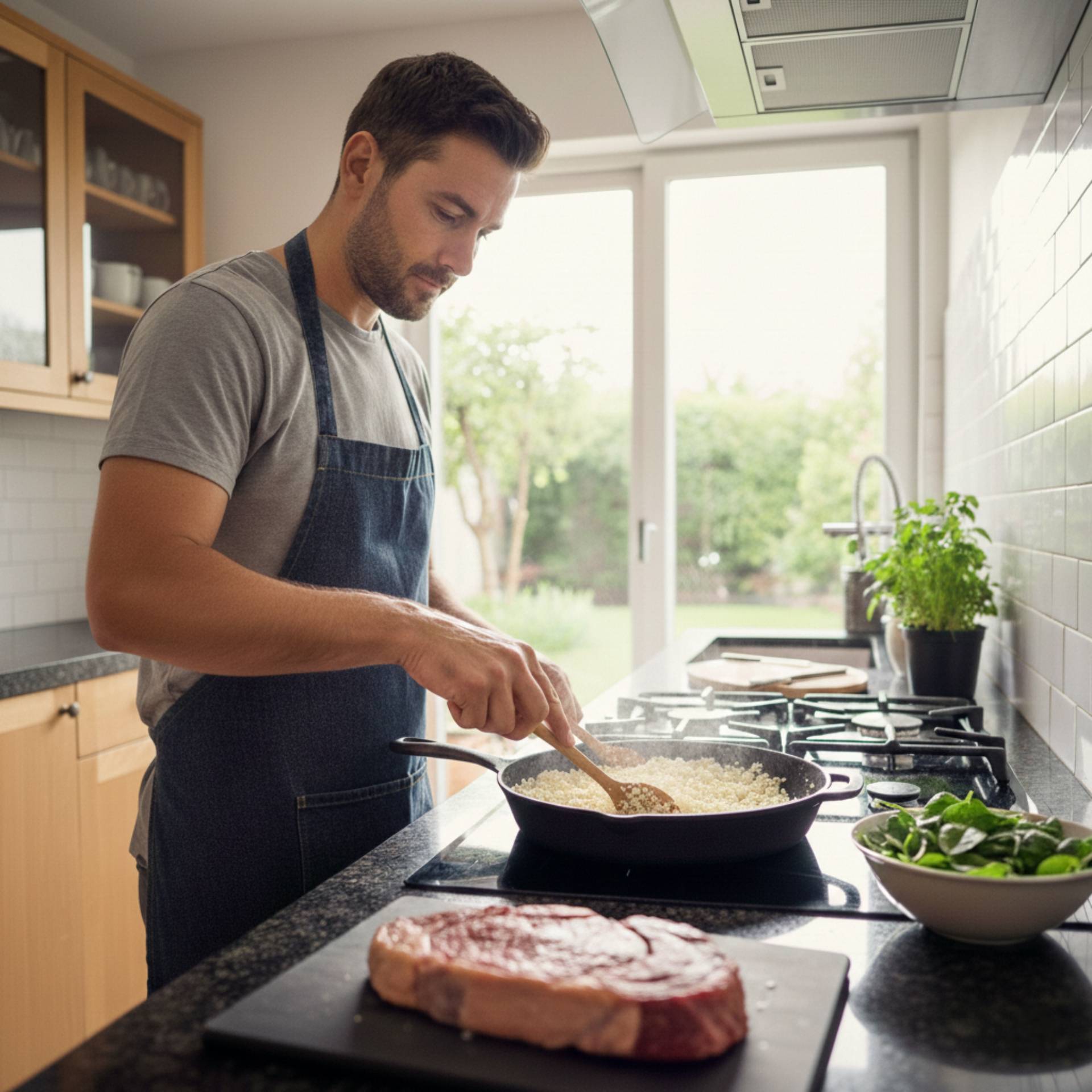
When building a Volumetric meal, the goal is to aim for a plate that is 50–70% low-density fiber. Start with your protein source (the primary satiety driver), then build a massive “filler” base around it. For example, if you are making a chicken curry, instead of serving it over a cup of white rice (approx. 200 calories), serve it over three cups of cauliflower rice (approx. 75 calories). You have tripled the volume, triggered the stretch receptors more effectively, and saved 125 calories. This is not deprivation; it is tactical volume management.
Calibrating Your System for Success
As you transition to a Volumetrics approach, your digestive system may require a brief calibration period. High-fiber “fillers” increase the workload of your gut microbiome. To support this, ensure you are increasing your water intake in parallel with your fiber intake. This ensures that the fiber moves efficiently through your system, providing the benefits of satiety without digestive lethargy.
The Volume Victory
The Volumetrics approach proves that weight management doesn’t have to be a battle against hunger. By understanding the mechanical triggers of your brain and utilizing high-fiber fillers, you can engineer a lifestyle where you always feel full and satisfied. You are not “tricking” your body into being healthy; you are providing the exact biological signals it needs to thrive in a high-volume, low-density environment.
7 Comments