
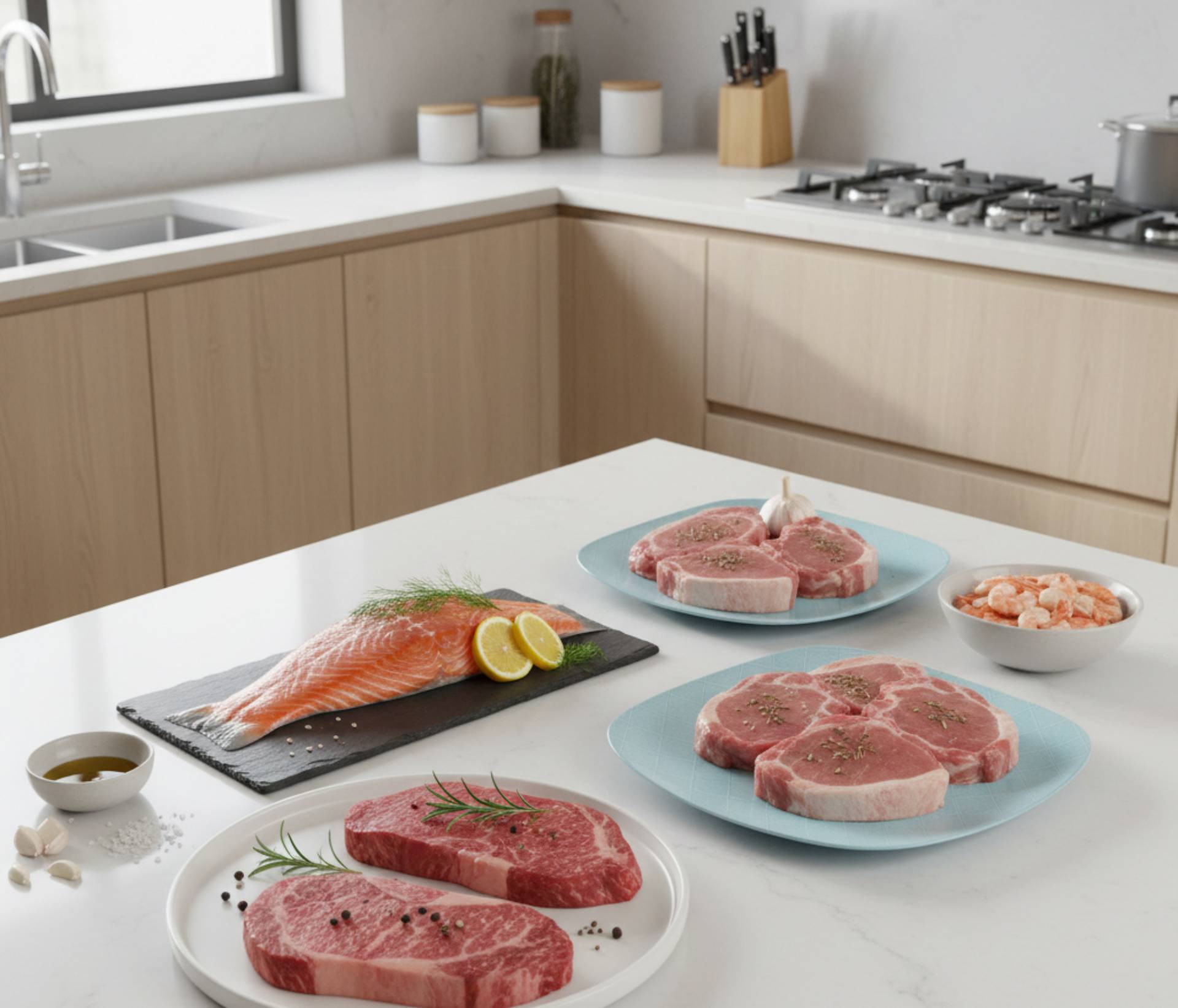
The Ultimate Guide to High Protein Low Calorie Meats
When managing weight or improving metabolic health, protein is often hailed as the “holy grail” of macronutrients. It supports muscle maintenance, fuels enzymes, and—perhaps most importantly—induces higher levels of satiety than fats or carbohydrates. However, not all protein sources are created equal. As seen in the nutritional breakdown of common meats and fish, the caloric cost of 20 grams of high protein can vary by hundreds of calories depending on the source and preparation.
To optimize your intake, the goal is to improve the Protein-to-Calorie Ratio. Here is how to strategically navigate your protein choices to get the most “bang for your buck.”
1. Prioritize “The Big Three” of Lean Gains
If your goal is high protein with minimal caloric overhead, three sources stand out as the gold standard: Chicken Breast (skinless), Turkey Breast, and White Fish (like Cod or Tilapia). These sources are almost entirely comprised of protein and water, with negligible fat content. For example, 100 g of chicken breast provides roughly 23 g of protein for only 106 calories. In contrast, 100 g of Atlantic Salmon—while incredibly healthy due to its Omega-3 content—contains nearly double the calories (208) because of its high fat density. When calories are the primary constraint, leaning toward “white” meats and fish is the most efficient path.
2. The “Hidden” Calorie Traps: Skin and Marbling
The most significant caloric fluctuations in meat come from fat, not the protein itself.
- Poultry: Removing the skin from a chicken thigh can reduce the fat content by nearly half. While skin adds flavor, it is calorically dense and offers little nutritional value beyond taste.
- Red Meat: When selecting beef or pork, look for “Loin” or “Round” cuts. These are naturally leaner. If you are using ground meats, switching from an 80/20 blend to a 95/5 blend can save you over 500 calories per pound while actually increasing the total protein delivered.
3. Preparation is Everything
A lean piece of cod can quickly become a high-calorie meal if it is breaded and fried. To maintain the integrity of the lean protein:
- Dry-heat cooking: Grilling, roasting, or air-frying allows rendered fat to drip away from the meat.
- Steaming or Poaching: These methods require zero added fats (oils or butter), keeping the calorie count exactly as it appears in the raw table.
4. The Psychological Edge of Volume
Choosing lower-calorie proteins like white fish allows you to eat a larger physical volume of food for the same caloric “spend” as a small portion of fatty steak. From a psychological standpoint, seeing a full plate can prevent the feeling of deprivation, making a healthy mindset much easier to maintain.
By focusing on lean cuts and mindful preparation, you ensure that your body gets the structural tools it needs without the energetic surplus that leads to unwanted weight gain.
Know your numbers. Use our raw meat protein calculator to find the most efficient protein sources for your goals.
Nutritional values vary significantly based on the specific cut and whether the meat is raw or cooked. The following guide provides averages for raw, edible portions to help you compare them easily at the grocery store.
Note that 1 lb is approximately 454 grams.
Comparison Table: Per 100g and Per 1 lb (Raw)
| Protein Source | Weight | Calories | Protein (g) | Total Fat (g) |
| Chicken Breast (Skinless) | 100g | 106 | 23 | 1.1 |
| 1 lb | 481 | 104 | 5 | |
| Chicken Thigh (Skinless) | 100g | 120 | 20 | 4 |
| 1 lb | 544 | 91 | 18 | |
| Lean Beef (e.g., Sirloin) | 100g | 134 | 23 | 4.5 |
| 1 lb | 608 | 104 | 20 | |
| Pork Loin (Lean) | 100g | 164 | 21 | 8 |
| 1 lb | 744 | 95 | 36 | |
| Lamb (Lean Cut) | 100g | 156 | 19 | 9 |
| 1 lb | 708 | 86 | 41 | |
| Salmon (Atlantic) | 100g | 208 | 20 | 13 |
| 1 lb | 944 | 91 | 59 | |
| Cod / White Fish | 100g | 82 | 18 | 0.7 |
| 1 lb | 372 | 82 | 3 | |
| Turkey Breast (Skinless) | 100g | 104 | 24 | 1 |
| 1 lb | 472 | 109 | 4.5 |
A few tips to consider:
- The “Skin” Factor: For poultry, leaving the skin on can nearly double the fat content and increase calories by 25–40%.
- The Fat Margin: In red meats (beef/pork), the difference between “Lean” (95/5) and “Regular” (80/20) ground meat is substantial. 1 lb of 80/20 ground beef can contain over 1,100 calories compared to roughly 600 for the leanest cuts.
- Satiety Science: From a psychological perspective, white fish and chicken breast offer the highest “protein-to-calorie” ratio, which is often a cornerstone for those focusing on volume eating or metabolic health.



3 Comments